

- Exercise and Fitness
- Rehabilitation
- Training and Behavior
- Time and Labor Efficiency
- Safety and Control
- Maintenance of Horses in Stables
- Performance Enhancement (Racing and Competition)
- Convenience for Large Facilities

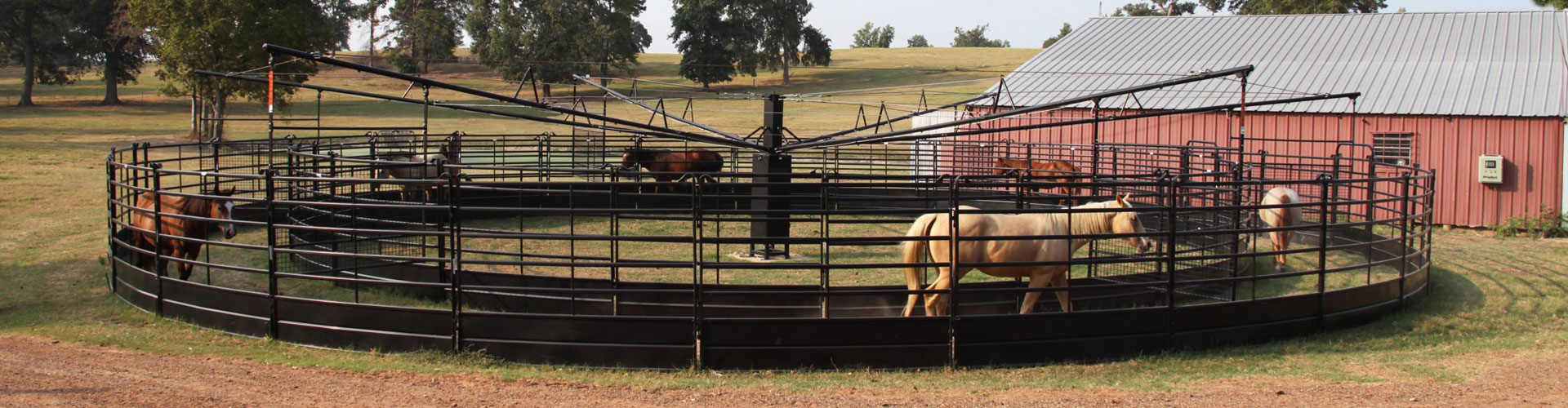
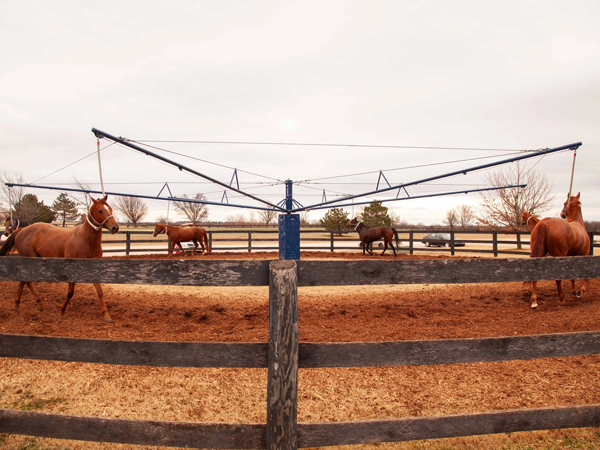
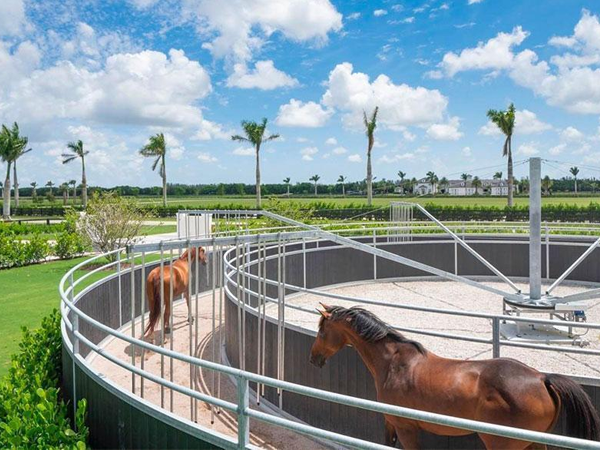
The Panel Walker eliminates the need to tie your horses to the walker so they are able to move about more freely. Horses that have never been in a walker have become trained to use the walker within minutes. With low impedance electrically charged, free swinging divider panels horses that lag behind are encourage to keep pace. Each divider panel is made of heavy duty 2″x2″ 4 gauge wire mesh and the electrical charge is optionally activated at the control box. Panels can be ordered with the horizontal rails or wire mesh for the budget minded. Horse Safe Premiere Panels feature J legs for stability, fish hooks eliminate leg traps, chain connectors for easy hook up. Diameter 4 horse 42ft, 6 horse 52 ft or 72 ft, 8 horse 72 ft.
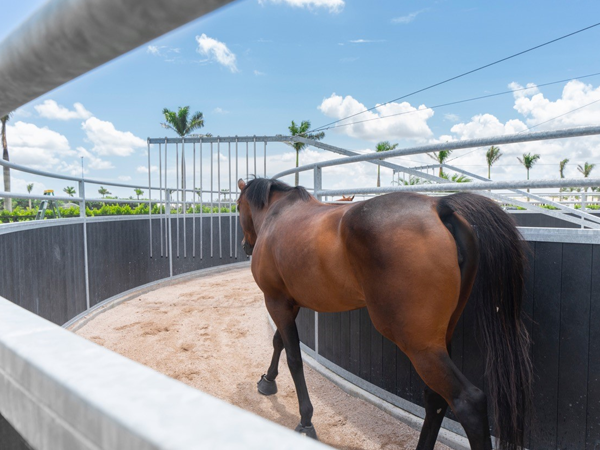
Another great feature of the TAILONG Panel Walker is the walker round pen. Take a closer and our panels are curved for the specific diameter required. This creates a perfect circle for the walker to operate within. Each curved panel is a full 6′ tall and made of heavy duty 16 gauge 2″ diameter tubing. There are no sharp edges, misplaced connectors or places for an animal to hang up. Solid bottom sheeting keeps the dirt in the tack and eliminates leg traps as well. The inner and outer round pens feature a convenient gate with sliding latch and a 9 ft alley way for horses to move in.
Both the Solid Bottom Panel and the Premier Curved Panels can also be purchased for use as a standard round pen.
Optional: Sprinkler System – enhances the drag’s effectiveness and keeps the ground moist to eliminate dust. Just attach any outdoor water hose to the walkers sprinkler hookup and you are ready to go.
Optional: Leveling Drag
Optional: Control Box Pedestal for housing your control if located out in weather
Additional information
Weight: 2000 lbs
Walker Options: 4 Horse, 6 Horse, 8 Horse
Diameter: 42ft Diameter, 52ft Diameter, 72ft Diameter
Panel Style: Standard Rail, Wire Mesh
Operation: Push Button, Programmable



Keep in touch with us
If you have any questions or requirements , please feel free to contact our customer service team. Our professional team will provide you with detailed product information, answer your questions, and tailor the best solution to meet your needs.
Mob:+86-153-6985-6999 +86-133-2318-6988
E-mail:Sales@fence-global.com